

How to play
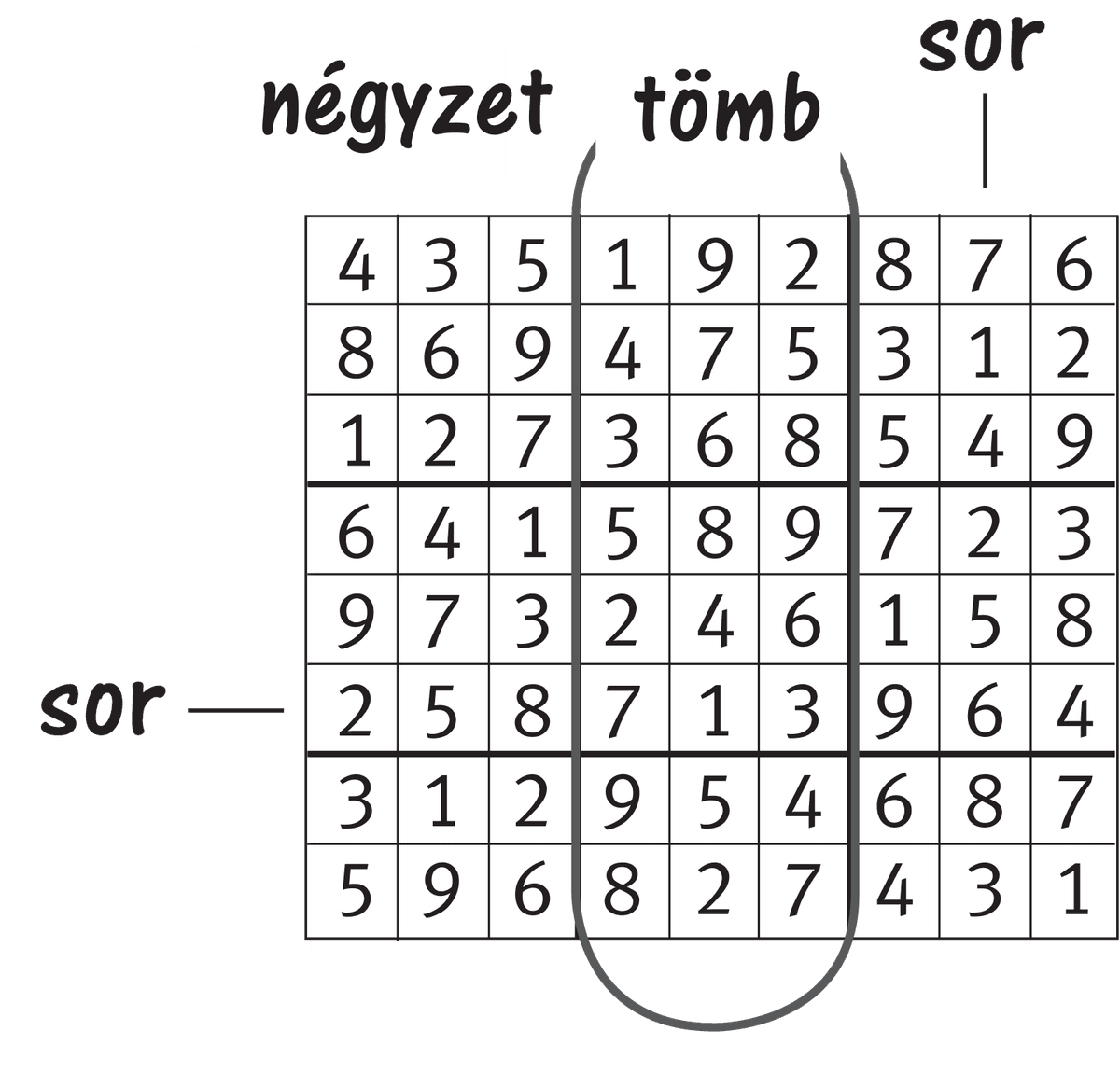
- each completed ROW must contain all the digits from 1 to 9,
- each completed COLUMN must also contain all the digits from 1 to 9,
- and every completed three times three NONET must also contain all nine digits from 1 to 9, so that:
- no number in each ROW, COLUMN and NONET is repeated and no number is left out!
Taking the above rule into account, we have to fill in all the empty fields of the 81-number table. If we look at the solution on the left, we can see that every row, every column, and all nine 3×3 squares contain the numbers 1 through 9. All games work on the same principle.
Let’s familiarise ourselves with the explanation of the following terms, so that their meaning is clear later:
ROWS and COLUMNS = all the horizontal rows and vertical columns consist of nine squares, containing all nine digits from 1 to 9.
NONET = a unit of three times three fields, in which all nine digits appear, each from 1 to 9 only once.
BLOCK = three NONETS next to each other either horizontally or vertically.
The goal is to fill in all the squares according to these rules. You may have already noticed that the easiest way to find the missing numbers and their locations on the grid is to first look for two numbers that are the same within a BLOCK, and then find the location of the third number. Let’s look at some easy puzzles:
How to play
- each completed ROW must contain all the digits from 1 to 9,
- each completed COLUMN must also contain all the digits from 1 to 9,
- and every completed three times three NONET must also contain all nine digits from 1 to 9, so that:
- no number in each ROW, COLUMN and NONET is repeated and no number is left out!
Taking the above rule into account, we have to fill in all the empty fields of the 81-number table. If we look at the solution on the left, we can see that every row, every column, and all nine 3×3 squares contain the numbers 1 through 9. All games work on the same principle.
Let’s familiarise ourselves with the explanation of the following terms, so that their meaning is clear later:
ROWS and COLUMNS = all the horizontal rows and vertical columns consist of nine squares, containing all nine digits from 1 to 9.
NONET = a unit of three times three fields, in which all nine digits appear, each from 1 to 9 only once.
BLOCK = three NONETS next to each other either horizontally or vertically.
The goal is to fill in all the squares according to these rules. You may have already noticed that the easiest way to find the missing numbers and their locations on the grid is to first look for two numbers that are the same within a BLOCK, and then find the location of the third number. Let’s look at some easy puzzles:
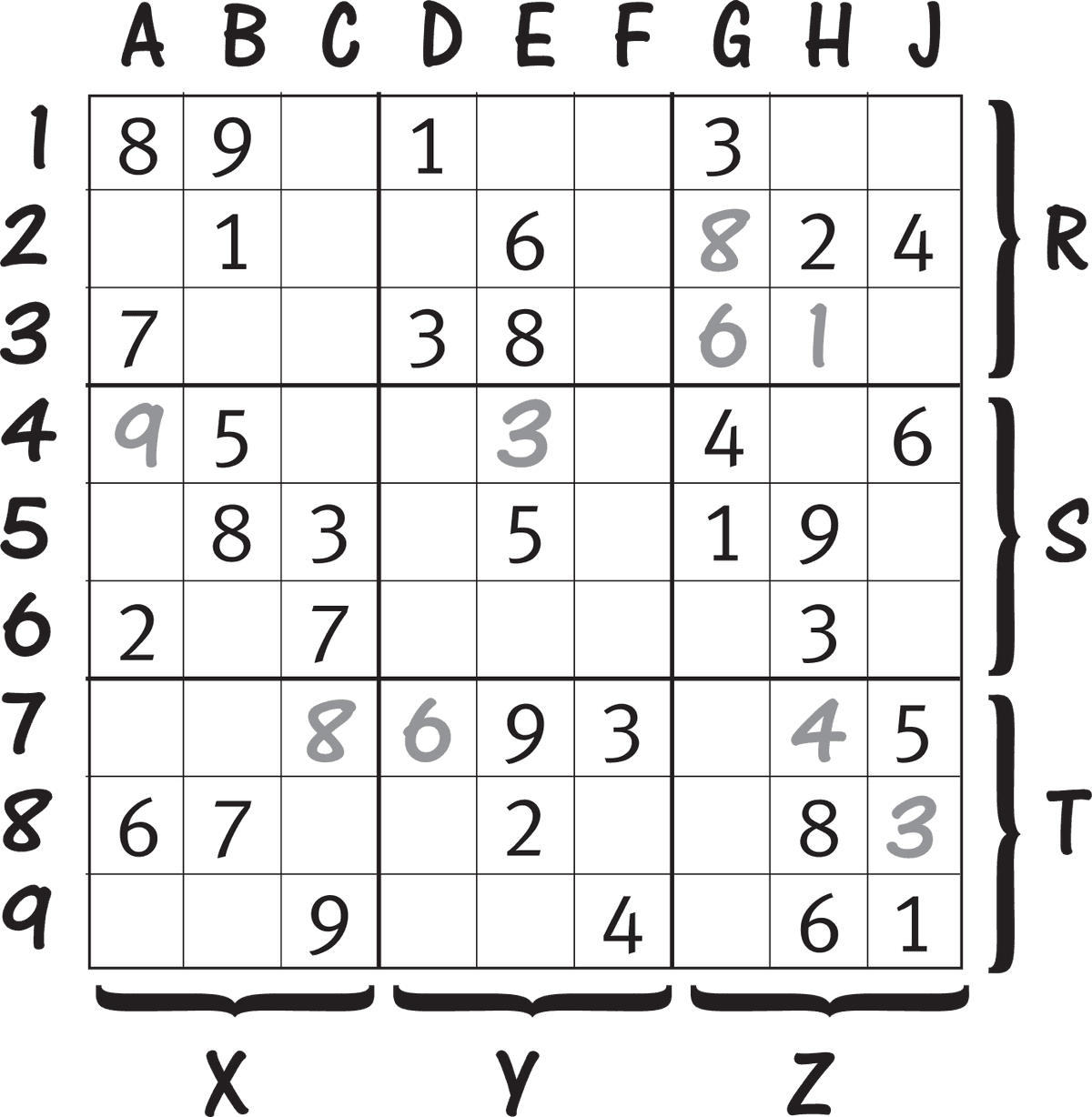
FIRST STEPS: It is best to search for two identical numbers in the same BLOCK of 27 numbers.

Let’s look at the R nonet. There is an 8 in field XR A1 and another in field YR E3. So there must be an 8 in field ZR, in the second row. Since there is only one empty space left, enter an 8 in G2.

Now let’s look at the number 9 in the vertical X block. There is one 9 in the XR at B1 and another 9 in the XT square at C9. So we need to place a 9 in column A. Here we have two unfilled places: A4 is our only option.

Now let’s look at the horizontal T block. There is a number 6 in A8 and another 6 in H9. We need to place a 6 in the YT block in the seventh row. Since there is only one empty space here, we write 6 in D7!
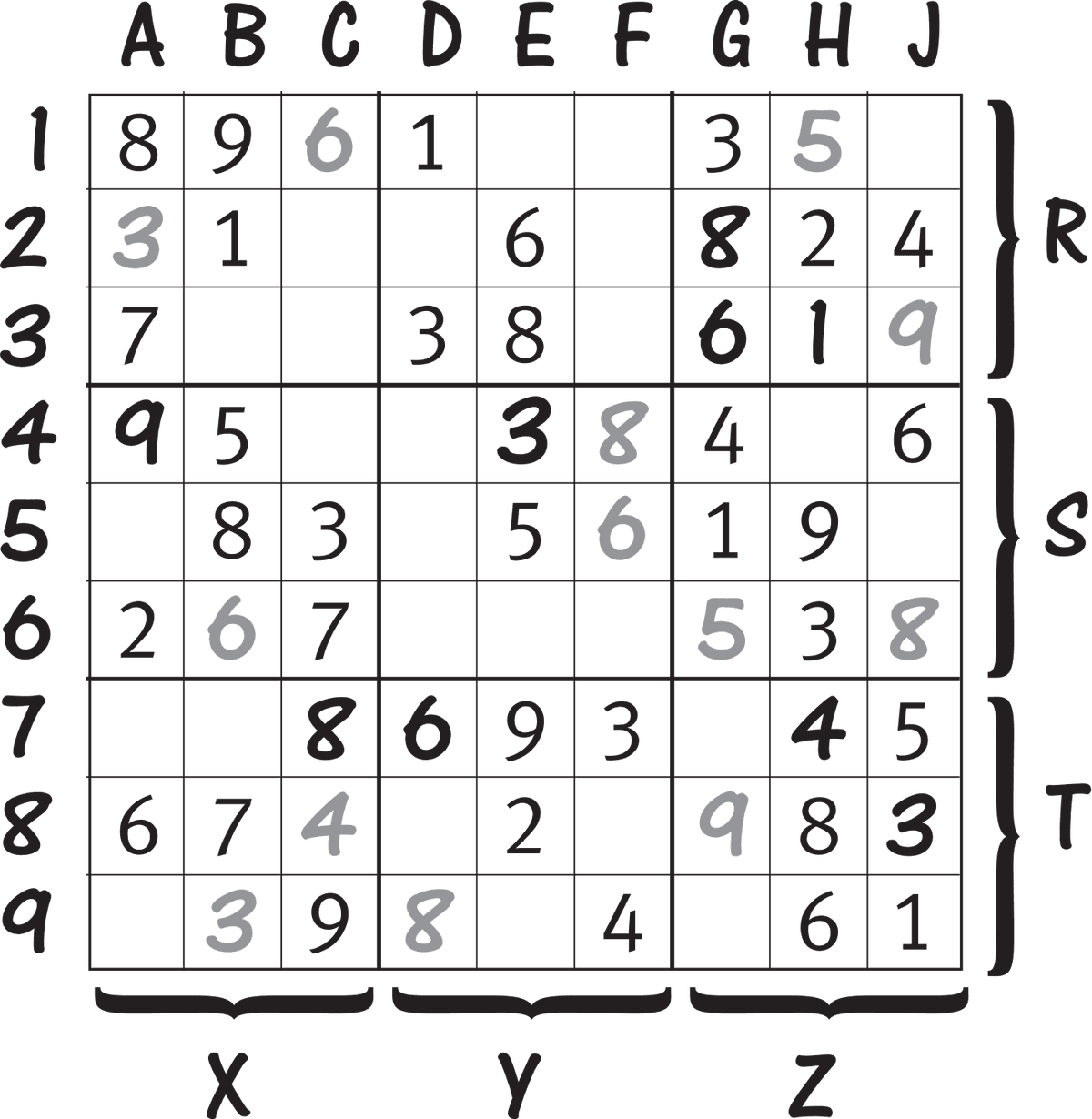
SECOND STEP: Now we know that we can easily find pairs in the same block, i.e. in its three nonets, so we can fill in a missing number.
We systematically examine the blocks and find pairs, and fill in the third number. We go through the blocks again and again, and as we write numbers in more and more places, we find more and more new pairs.
LET’S LOOK AT STEP THREE! The placement of a third missing number is not always clear. Sometimes the situation is complicated by the fact that there are several options.
For example, there are two 9s in the R block, and the third can either go into D2 or F2. To decide which is the right place, we will need another 9 in the Y block.
We’ve already gone through all the pairs and we don’t have too many missing numbers (26), let’s look at another option to fill in the blanks.
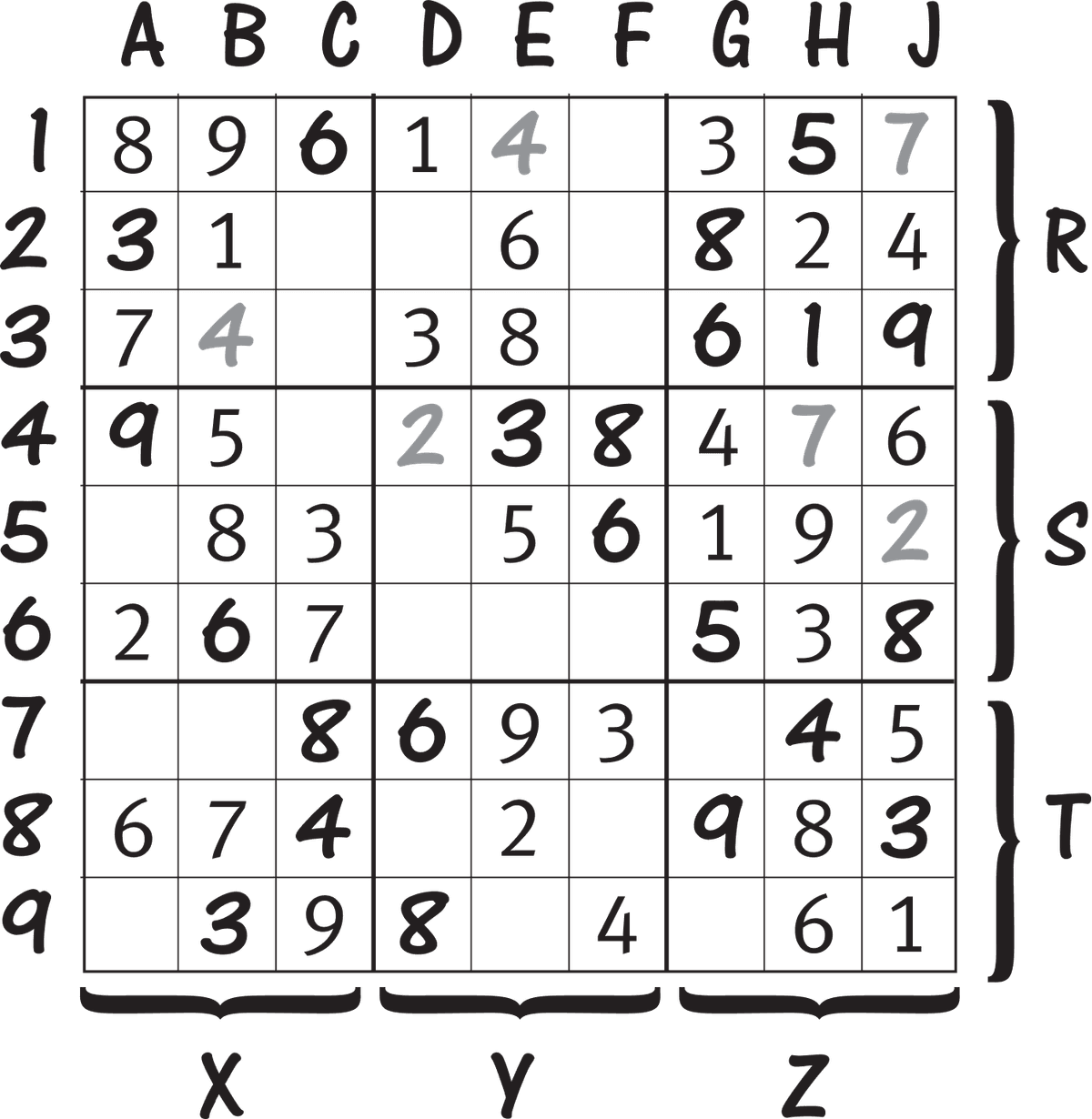

There is an empty space in the RZ nonet, so let’s enter the missing 7.

Let’s see if this 7 helps us. We need another 7 in the NW nonet. We cannot write in row J, so we will write in H4.

Now only one number is missing from the SZ nonet, enter 2 in J5 like this. As a result, we already have two 2s in the S block, and the missing 2 has only one place left, which we have to enter in D4.

Place 4 in the R block. The 4 in J2 means it should be in column B of the RX nonet, since C8 already has a 4 in column C. In nonet RY, the missing 4 has its place in the first row, but since there is already a 4 in column F, our only option remains E1.
LET’S LOOK AT STEP FOUR, with 20 missing numbers! Some squares may look difficult to fill, and perhaps impossible until other squares are filled. Look through the rows vertically and horizontally until you find pairs or until you find a single missing number, and sooner or later you will find the answers, i.e. the locations of the missing numbers.
FIFTH STEP - THE WHOLE SOLUTION Remember that there is only one solution to each Sudoku puzzle! It is not advisable to guess or think about mathematical relationships while completing it. Be patient, attentive and use the logic you have learned!
GOOD ADVICE: Use a pencil rather than ink to fill in the grids. If a mistake is made it’s often difficult to work back to where you went wrong and if a pencil has been used it is easy to rub out and start afresh. Don’t guess. There is always a “next square” which can be filled by logic and deduction. If you do guess and it is wrong then this will be revealed later and that can be very frustrating. Sometimes noting which numbers are possible by the side of a square can help. However, it’s easy for the grid and margins to become clogged up with those possibilities, which may, in turn, cause further confusion. It is best to devise your own system of notation and stick to it. More guidance will only confuse. It is now time to get into the puzzles and develop your own short-cuts and methods.
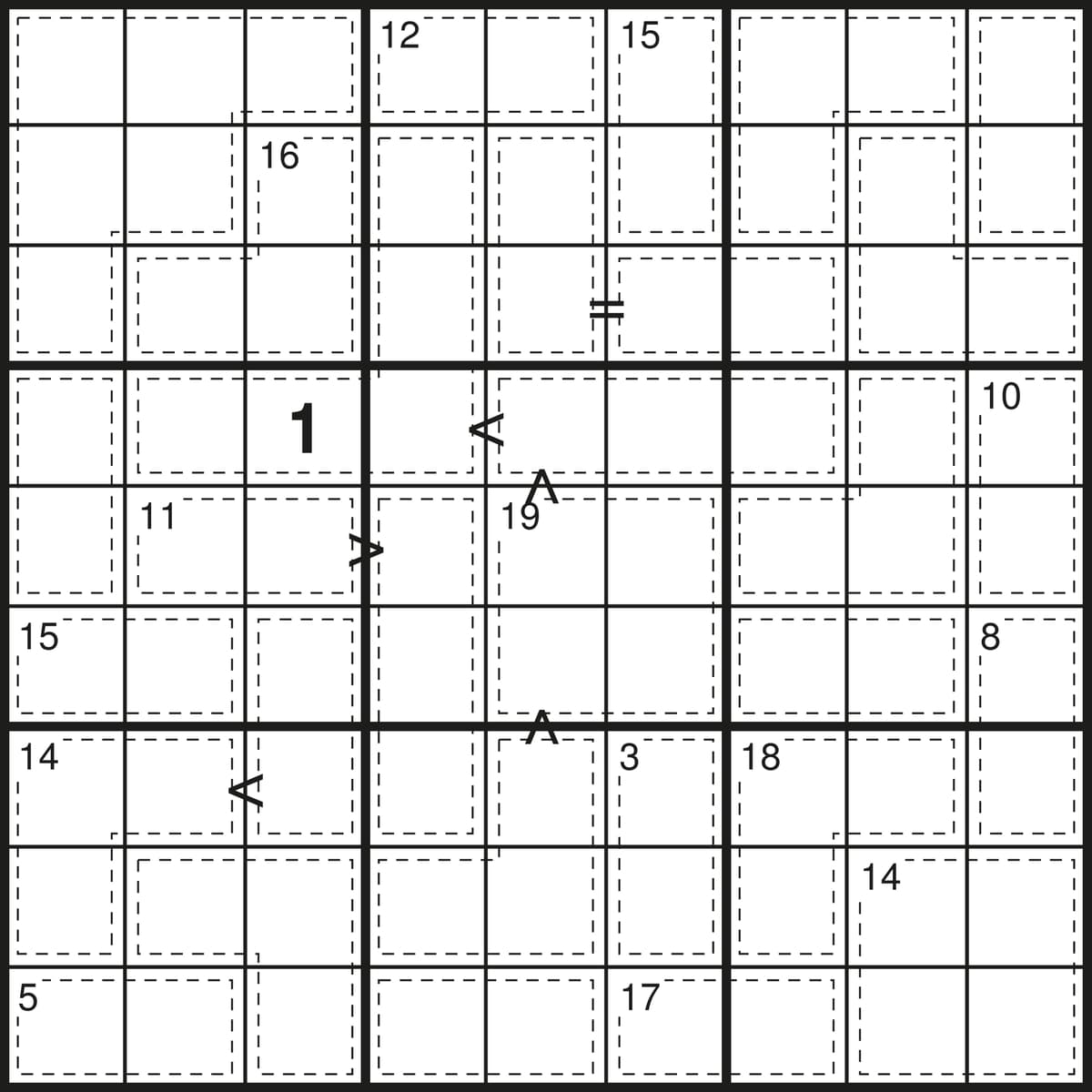
Rules of “more than” Sudoku
It has to be solved in the same way as Sudoku, only you have to make sure that all the “>” (smaller/larger) signs are correct.
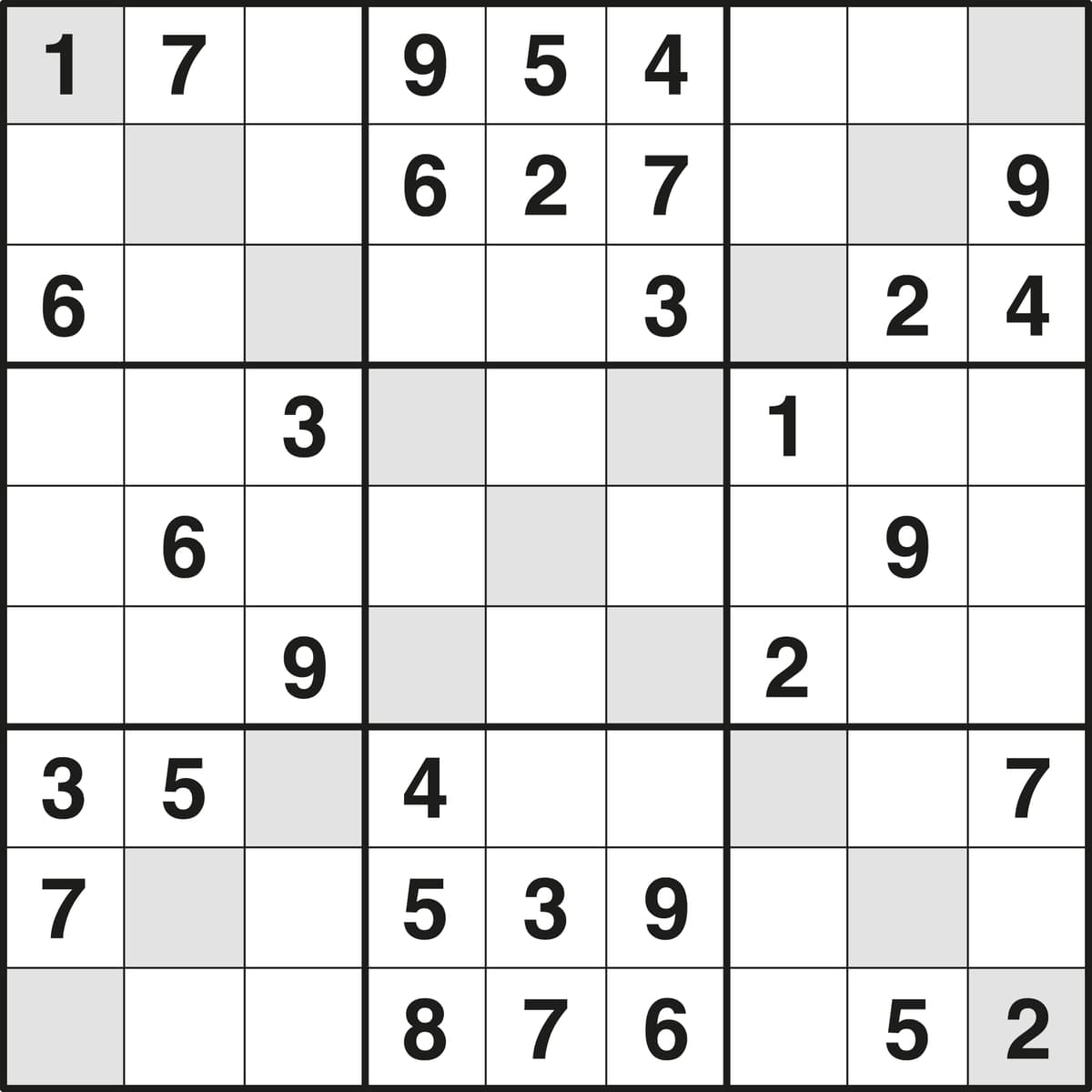
Rules of Sudoku X
X Sudoku has the same rules as basic Sudoku, with the one addition that the squares on the two diagonal lines must also contain all the numbers from 1 to 9.
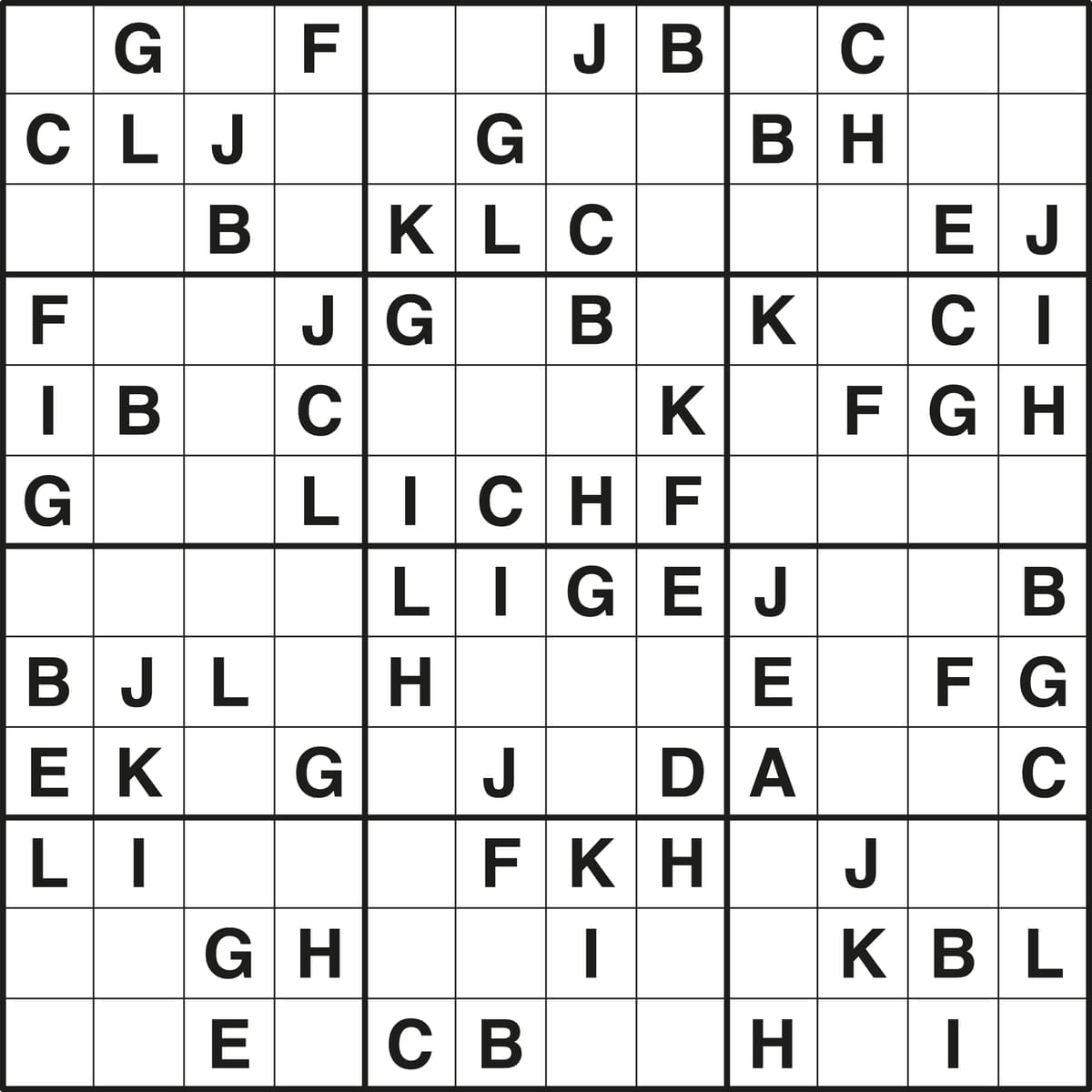
Rules of Super Sudoku
To solve a Super Sudoku (12x12 square), the following letters are required: A, B, C, D, E, F, G, H, I, J, K, L. Similarly to regular Sudoku, within all lines, columns and 4 by 3 rectangles, each letter must appear at least once and not more than once.
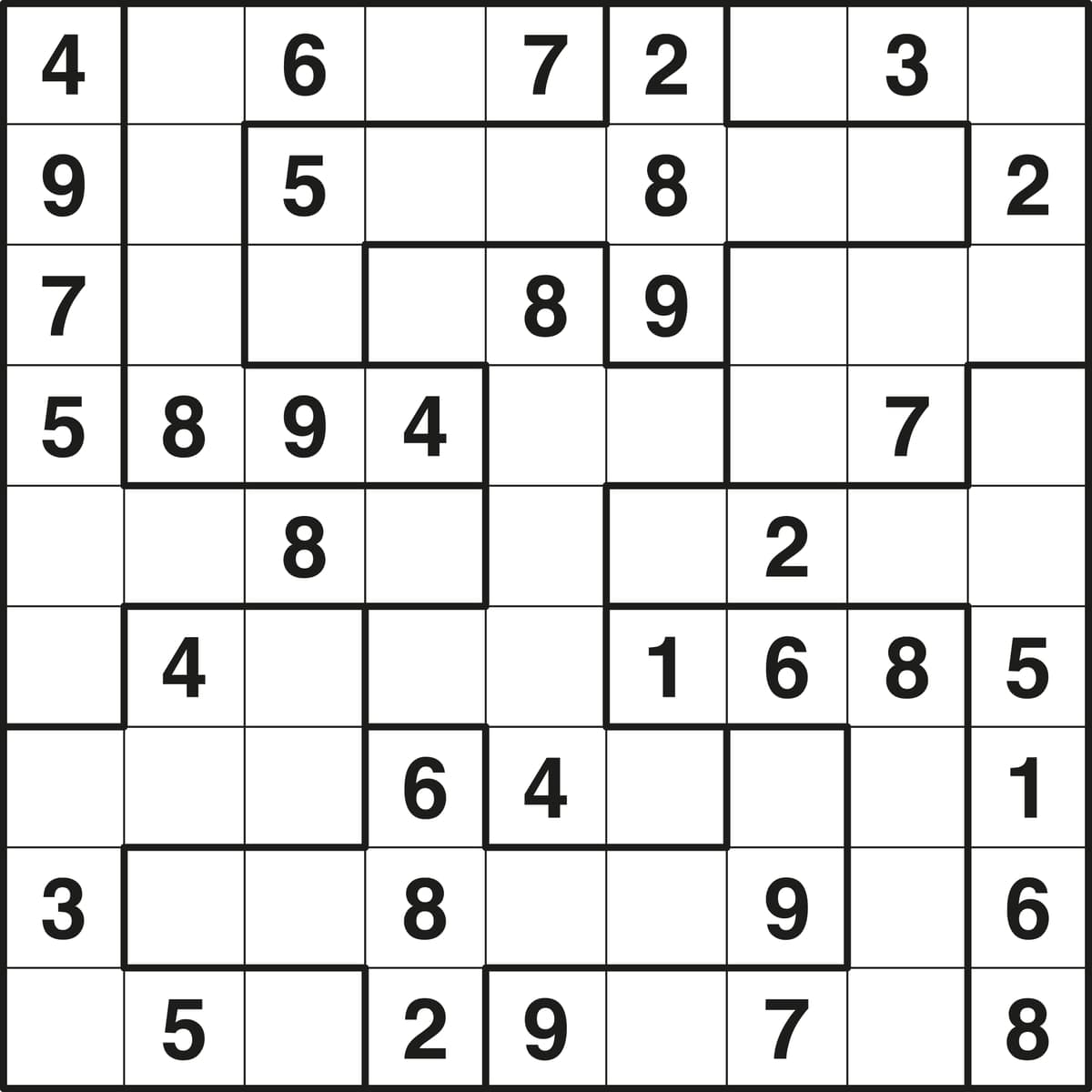
Rules of Amoeba Sudoku
The rules concur with the regular Sudoku’s, except the shape of the nonets are irregular. Each irregular nonet still needs all numbers from 1-9 to be filled in.
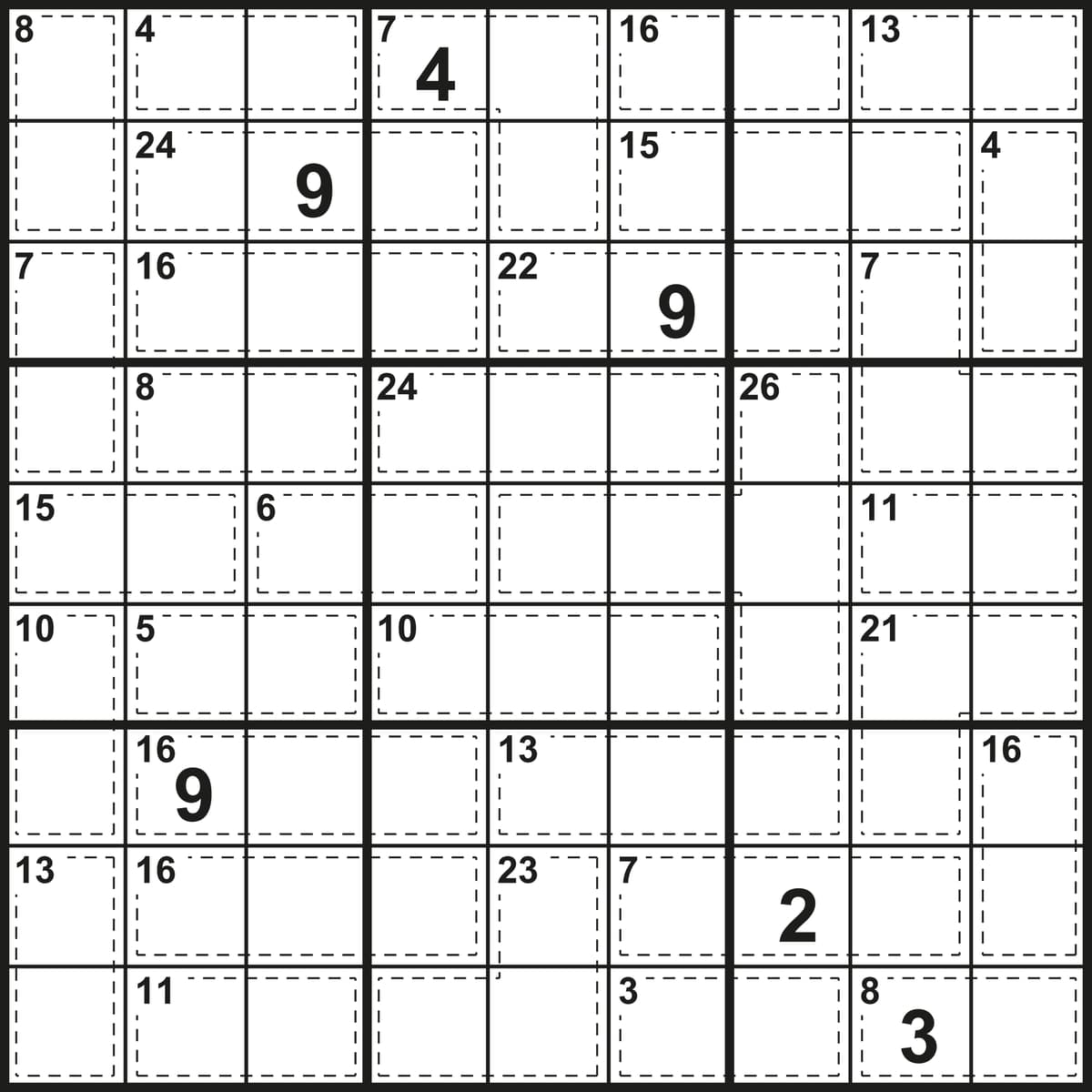
Rules of “Killer” Sudoku
The rules of “Killer” Sudoku - with two important additions - are the same as the rules of the basic Sudoku. So each column, row and nonet must contain all the numbers from 1 to 9. The additional rules are as follows:
The caged areas (marked by faint dashed lines) must contain numbers that add up to the small number written in the cage.
Each number may appear only once within a cage. For example, if three cells are caged with a sum of 7, the only valid combination is 1, 2 and 4, since 2+2+3, 1+1+5 or 3+3+1 are not allowed due to repeating numbers.